|
"I
am the conscience of all those who knew something - but
did nothing."
- Oskar Schindler
Questioning the Story:

Why did Oskar Schindler do what he did?
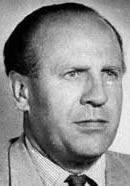
Schindler never gave a clear explanation for why he
protected and saved the lives of as many Jews as he did.
Some might say that his humane actions and sacrifices need
no explanation. Schindler attempted to explain his actions
by saying the following,
"I knew the people who worked for me. When you know
people, you have to behave towards them like human beings."
Another time, Schindler described his behavior differently,
"There was no choice. If you saw a dog going to be
crushed under a car, wouldn't you help him?"
Below, Schindlerjuden (Schindler's Jews) offer their
own explanations of Schindler's motives:
Johnathan Dresner: "He was an adventurer. He was like
an actor who always wanted to be centre stage. He got into
a play, and he couldn't get out of it."
Mosche Bejski: "Schindler was a drunkard. Schindler
was a womanizer. His relations with his wife were bad. He
often had not one but several girlfriends. Everything he
did put him in jeopardy. If Schindler had been a normal
man, he would not have done what he did."
Danka Dresner: "We owe our lives to him. But I wouldn't
glorify a German because of what he did for us. There is
no proportion."
Abraham Zuckerman: "The movie didn't show all the little
things he did; he came around and greeted you. I had food,
protection, and hope."
Salomon Pila: "I don't know why he was so good to us,
but I would say, `Thank you very much,' because he saved
my life."
Helen Beck, one of the women rescued from Auschwitz: "I
will never forget the sight of Oskar Schindler standing
in the doorway (at Brunnlitz). I will never forget his voice
- `Don't worry, you are now with me.' We gave up many times,
but he always lifted our spirits . . . Schindler tried to
help people however he could. That is what we remember."
Ludwik Feigenbaum: "I don't know what his motives
were, even though I knew him very well. I asked him and
I never got a clear answer and the film doesn't make it
clear, either. But I don't give a damn. What's important
is that he saved our lives."
What happened to Oskar Schindler after the war?
After
the war, Schindler went to Argentina with his wife, his
mistress, and a group of former Schindlerjuden
where they bought a farm. In 1958, for seemingly no reason
at all, Oskar Schindler left Argentina, his wife, and his
mistress to return to Germany. He
spent the remaining years of his life traveling between
Germany and Israel, where after several failed business
ventures, he lived primarily on handouts from his Schindlerjuden.
Oskar Schindler died in Hildesheim in 1974. At his side
was his current mistress, the wife of his doctor.
Why did he leave his wife and never return?
Even Emilie Schindler was not sure why Oskar never returned
to her. In a passage from her A Memoir Emilie wrote of visiting
Oskar's tomb over 37 years after he left:
"At last we meet again .. I have received no answer,
my dear, I do not know why you abandoned me .. But what
not even your death or my old age can change is that we
are still married, this is how we are before God. I have
forgiven you everything, everything .."
How was Schindler viewed by Germans in post-war Germany?
Schindler was deprived of his nationality immediately after
the war. His former business partner refused to work with
him, people denounced him in the streets, and he received
threats from former Nazis.
Does evidence of the actual list still exist?
In 1999, the list of Jewish employees drawn up by Oskar
Schindler to save them from the Nazi death camps was discovered
in a suitcase that was found while a couple was cleaning
the home of their late parents. The family had been close
friends of Schindler.
This finding was reported by the german newspaper Stuttgarter
Zeitung.
Was the little girl in the red coat a real person?
 Steven
Spielberg did not knowingly base the girl on an actual person.
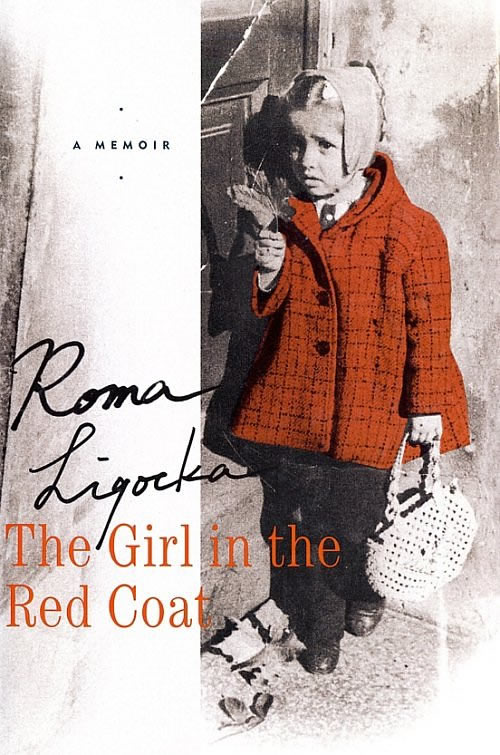
However, after seeing the film, holocaust survivor Roma
Ligocka (pictured left - click
to enlarge) identified with some of the film's characters.
In the Krakow ghetto, Ligocka was known to everyone by the
strawberry-red coat she always wore. This encouraged her
to write a memoir of her experiences titled The Girl in the Red Coat. The memoir is still available to read. Steven
Spielberg did not knowingly base the girl on an actual person.
However, after seeing the film, holocaust survivor Roma
Ligocka (pictured left - click
to enlarge) identified with some of the film's characters.
In the Krakow ghetto, Ligocka was known to everyone by the
strawberry-red coat she always wore. This encouraged her
to write a memoir of her experiences titled The Girl in the Red Coat. The memoir is still available to read.
Link
to Learn More:
 The
List
The
List
Amon
Goeth
Itzhak
Stern
Jewish
Virtual Library: Oskar Schindler
Schindler's
List Teaching Guide
Emilie
Schindler
Steinhouse:
The Real Oskar Schindler
Roger
Ebert's Review
Watch
the Schindler's List Movie Trailer:
 |

|
Message Board (Discuss the Film):

|