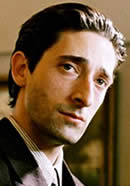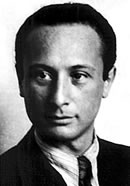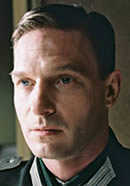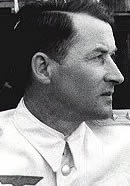
Wladyslaw Szpilman, Adrien Brody, The Pianist
The Pianist book Wladyslaw Szpilman


Browse by Movie


REEL FACES HOME


The Pianist (2003)
Starring Adrien Brody, Emilia Fox
based on the book "The Pianist: The Extraordinary True Story of One Man's Survival in Warsaw, 1939-1945" by Wladyslaw Szpilman
Reel Face: Real Face:
Adrien Brody Adrien Brody
Born: April 14,
1973
Birthplace:
New York, New
York, USA
Wladyslaw Szpilman Wladyslaw
Szpilman

Born: December
5, 1911
Birthplace:
Sosnowiec, Poland
Date of Death:
July 6, 2000
Warszawa, Poland


Thomas Kretschmann Thomas
Kretschmann

Born:
September 8,
1962
Birthplace:
Dessau, East
Germany
Wilm Hosenfeld

Wilm Hosenfeld
Born: May 2, 1895
Birthplace: ?
Date of Death:
1950
(Soviet prisoner of
war camp
)

"I just cannot understand how we have been able to commit such crimes against defenseless civilians, against the Jews. I ask myself again and again, how is it possible?" - Wilm Hosenfeld (excerpt from Hosenfeld's diary)


Questioning the Story:


Why was director Roman Polanski so passionate about doing this movie?
Roman Polanski's inspiration for doing The Pianist came from the fact that he himself had been a prisoner of the Polish ghetto during World War II. He had returned to Poland from France with his parents just two years before the second world war began. Both of his parents were taken to concentration camps, where his mother eventually died. With the help of his father, who pushed him through the barbed wire of a camp, Roman escaped the ghetto and traveled through the Polish countryside where he lived with different Catholic families. He reunited with his father in 1945.

Why did Szpilman's book go unnoticed for so long?
Recently published in English with the title "The Pianist," Wladyslaw Szpilman's harrowing account was first published in Poland in 1946 under the title "Death of a

City." Until recently, the book had remained largely unnoticed. Upon its initial publication, the Communists suppressed it, because, as Wolf Biermann surmises in an Epilogue to The Pianist, it "contained too many painful truths about the collaboration of defeated Russians, Poles, Ukrainians, Latvians and Jews with the German Nazis". Stalin, at the time of his death in March 1953, had been assembling a transport for his own eastwards "resettlement" of the Jews, which could have led to a second Holocaust. It was only after the dissipation of the Soviet block that publication became possible thanks to the efforts of Wlayslaw Szpilman's son.

Did a boy at the train stop at Umschlagsplatz really sell Wladyslaw Szpilman and his family a single, overpriced caramel as their last meal together?
Yes. This was Szpilman's last memory of his family together. In his memoir he said the following, "At one point a boy made his way through the crowd in our direction with a box of sweets on a string round his neck. He was selling them at ridiculous prices, although heaven knows what he was going to do with the money. Scraping together the last of our small change, we bought a single cream caramel. Father divided it into six parts with his penknife. That was our last meal together."


Watch the Peter Jennings Report on Wladyslaw Szpilman:
This brief report gives an overview about Szpilman during the course of the war from the German invasion in September 1939 to Poland's liberation in January 1945. Szpilman is shown as well as a picture of the officer who saved him. The quality is low but bearable due to its short runtime. Courtesy of Szpilman.net.

Peter Jennings Szpilman Report
(RealPlayer, Stream, 3 min 39 sec)


Watch the real Wladyslaw Szpilman play Chopin:
Watch and listen to Szpilman play this beautiful rendition of Nocturne c sharp minor by F. Chopin. The quality is good. Courtesy of Szpilman.net.

Wladyslaw Szpilman Plays Chopin
(RealPlayer, High Quality, Cable-DSL)

Wladyslaw Szpilman Plays Chopin
(QuickTime, .mov)

Wladyslaw Szpilman Plays Chopin
(RealPlayer, Medium Quality, Dial-Up Modem)


"I played Chopin's Nocturne in C sharp minor. The glassy, tinkling sound of the untuned strings rang through the empty flat and the stairway, floated through the ruins of the villa on the other side of the street and returned as a muted, melancholy echo. When I had finished, the silence seemed even gloomier and more eerie than before. A cat mewed in the street somewhere. I heard a shot down below outside the building - a harsh, loud German noise."

- Wladyslaw Szpilman, The Pianist


Wladyslaw Szpilman Images:
The pianist, Wladyslaw Szpilman.

Wladyslaw Szpilman with his son.
The photograph was taken in 1998.

Wladyslaw Szpilman with his grandchildren, Alina and Daniel.


Wladyslaw Szpilman Obituaries (Independent, 14 August 2000) :
When the shells of the invading Nazis forced the closure of Polish Radio on 23 September 1939, the last live music heard was Wladyslaw Szpilman's performance of Chopin's C sharp minor Nocturne. When broadcasting was resumed in 1945, it was again Szpilman who initiated the transmissions, with the same Chopin nocturne. (Around the same time, rather less high-mindedly, BBC television resumed an interrupted Mickey Mouse cartoon.) What happened to Szpilman in the interim formed the stuff of one of the most harrowing of all accounts of Jewish life under the Nazis, in a book published last year as The Pianist that immediately climbed to the top of the international bestseller lists --- hardly surprisingly: it is a compelling, harrowing masterpiece.

Szpilman wrote Death of a City (the initial title of his memoir) in 1945 more or less as therapy --- to put his memories down on paper and thus somehow to externalise them. In doing so he revealed that he was a masterly writer: his text matches a sharp eye for detail and for human character with a complete absence of self-pity and of sanctimony.

For the first two years of the occupation Szpilman played in the bars and cafés that continued to open for business behind the walls of the ghetto, sealed off from the rest of Warsaw on 15 November 1940. Szpilman records life there with dignity and dispassion. He recalls watching the SS forcing a group of prisoners out of a building:

They switched on the headlights of their car, forced their prisoners to stand in the beam, started the engines and made the men run ahead of them in the white cone of light. We heard convulsive screaming from the windows of the building, and a volley of shots from the car. The men running ahead of it fell one by one, lifted into the air by the bullets, turning somersaults and describing a circle, as if the passage from life to death consisted of an extremely difficult and complicated leap.

Time and again, chance dictated that Szpilman escape death. The end seemed finally to have come when he and his family were ordered to turn up at the Umschlagsplatz where, skirting the rotting corpses around them, they were to be herded onto trains headed for the gas chambers. Szpilman's last memory of his family is movingly understated:

At one point a boy made his way through the crowd in our direction with a box of sweets on a string round his neck. He was selling them at ridiculous prices, although heaven knows what he was going to do with the money. Scraping together the last of our small change, we bought a single cream caramel. Father divided it into six parts with his penknife. That was our last meal together.

But as the Szpilmans were being crammed onto the train, one of the Jewish policemen grabbed Wladyslaw by the collar, yanked him out of the throng and refused to let him through to rejoin his family on the journey to death.

Szpilman continued to avoid death's clutches, surviving against all odds, often half-starved and usually alone, hidden in obscure corners of bombed, burned or empty buildings, intermittently helped by Polish friends risking their own lives to bring him food or find him shelter: helping a Jew automatically brought a death sentence. The strangest twist in Szpilman's strange story came at its end: he was discovered by a German officer who, after Szpilman had given proof of his profession by playing that same C sharp minor Nocturne on an abandoned piano, hid him and brought him food and an eiderdown for warmth.

Not the least extraordinary aspect of Szpilman's book is the complete lack of the indignation and anger that anyone writing immediately after such years of hell might reasonably be expected to allow himself. Yet even the grim vignettes of pointless death that are studded through his text don't draw judgement --- perhaps because none was necessary:

A boy of about ten came running along the pavement. He was very pale, and so scared that he forgot to take off his cap to a German policeman coming towards him. The German stopped, pulled his revolver without a word, put it to the boy's temple and shot. The child fell to the ground, his arms flailing, went rigid and died. The policeman calmly put his revolver back in its holster and went on his way. I looked at him; he did not even have particularly brutal features, nor did he appear angry. He was a normal, placid man who had carried out one of his many minor daily duties and put it out of his mind again at once, for other and more important business awaited him.

Death of a City was published in Poland in 1946 and soon suppressed by the Communists because, as Wolf Biermann surmises in an Epilogue to The Pianist, it "contained too many painful truths about the collaboration of defeated Russians, Poles, Ukrainians, Latvians and Jews with the German Nazis". More likely, it was Szpilman's record of the suffering of the Jews that required silencing – after all, the Jews could hardly expect a warmer welcome in Stalin's empire than in Hitler's: when Stalin died, in March 1953, he was already assembling the transport for his own eastwards "resettlement" of the Jews, and his own death prevented would probably have been a second Holocaust. And so it was only after the collapse of the Soviet bloc that, thanks to the efforts of Szpilman's son, publication became possible.
Szpilman's initial training as a pianist was in the Chopin School of Music in Warsaw under Josef Smidowicz and Aleksander Michalowski, both of them former students of Liszt. In 1931 he enrolled at the Akademie der Künste in Berlin, studying piano under two of the most distinguished players of the day, Arthur Schnabel and Leonid Kreuzer, and composition under Franz Schreker, the renowned composer of Der ferne Klang and other similarly successful operas. On his return to Poland in 1933 he formed a highly successful duo with the violinist Bronislaw Gimpel that formed the basis, 29 years later, of the Warsaw Piano Quintet, whose tours soon earned it a reputation as an ensemble of world standing; Szpilman played with the Quintet until 1986.

Szpilman's own early compositions include a violin concerto and a symphonic suite, The Life of Machines, and when the Nazis invaded he was engaged on a Concertino for piano and orchestra --- a jazz-flavoured, Gershwinesque piece remarkably good-natured for the circumstances of its origin. The score went with him from hiding-place to hiding-place before he had to sacrifice it to survival; he reconstructed it after the War. His light music was particularly successful: for decades the Poles sang tunes from his three musicals, 50---60 children's songs and 600-odd chansons as they went about the business of their daily lives.

A CD released in 1998 by the German label Alina (run by Szpilman's son, Andrzej) testifies to both his fluency as a composer and his excellence as a pianist --- and it includes an archive recording of that life-saving Chopin nocturne. Six more CDs of Szpilman as both performer and composer are scheduled for release in Poland in the autumn. With luck his last-minute fame as a writer will bring his music the wider currency he would have wished for it during his lifetime.

MARTIN ANDERSON

Wladyslaw Szpilman, pianist and composer, born 5.December.1911, Sosnowiec, Poland; married Halina Grzecznarowski, 2 sons; died Warsaw, 6 July 2000.


Link-to-Learn More:
The Warsaw Ghetto Uprising (Photos and History)

THE PIANIST /***1/2 Movie Review by Roger Ebert


Watch the The Pianist Movie Trailer:

The Pianist movie trailer - SPLYCED (1:16)


EXPLORE
THE STORY
The Pianist dvd
The Pianist


The Pianist...
The Pianist:
The
Extraordinary
True Story of
One Man's
Survival in
Warsaw,
1939-1945


Original Recordings - IMPORT
Original
Recodings of
Wladyslaw
Szpilman
[IMPORT]


The Pianist soundtrack
The Pianist
Soundtrack


Wendy Lands Sings the...
Wendy Lands
Sings the
Music of the
Pianist
Wladyslaw
Szpilman


The Pianist
Movie Poster


CONTACT US | BOARDS | HOME | PRIVACY POLICY

ChasingtheFrog.com, CTF Media