Hart's
War
Starring Bruce
Willis, Colin Farrell
Directed
by Gregory Hoblit
Rated R
** out of 4 Stars

|
|
Hart's
War Directed
by Gregory Hoblit ** out of 4 Stars |
|
|
|
|
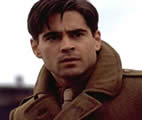
Released February 15, 2002 Running time: 125 minutes ** by Kevin Lang The opening sequence was enjoyable to watch. Although it was a little too graphic than it may have needed to be, it was gripping and well executed. It was unfortunate that the rest of the film didn't have the same effect. Set in 1945, the movie began with Lt. Thomas W. Hart (Colin Farrell) caught in an ambush by the Germans. He tried to escape, only to be captured and eventually shipped off to a World War II Stalag prison camp. These scenes were the best in the movie. They set a mood, and they effectively captured the tense, yet courageous atmosphere of the war. However, for a movie to sustain itself for two hours it must build off of and complement what it began with. The story was centered around the prison camp trial of an African American P.O.W., Lt. Lincoln A. Scott, played by Terrence Dashon Howard (Angel Eyes, 2001), who was accused of murdering a fellow inmate. Lt. Thomas W. Hart, who had been in law school back in the states, was assigned to defend Scott. As the story went on, certain unexpected things were revealed to us by way of the actors having to tell each other for the sake of the audience's understanding. One scene in particular stands out in my mind, and it still puzzles me how even Hart figured it out. It was supposed to be a twist in the story, but instead it only acted to significantly lessen our attachment to Willis' character, Col. William A. McNamara, who was the highest ranking officer and the leader among the prisoners. Maybe I could have accepted the cold-blooded murder of a fellow prisoner who was indirectly responsible for the execution of another P.O.W. whom he disliked because of the color of his skin, if that prisoner was killed in self-defense or put to death after a trial. However, to murder a fellow P.O.W. in cold blood, even for the sake of the war effort, was hard to accept in a story that had been on a slow decline since the beginning. It was even harder to believe that the murderer was regarded as a martyr by his fellow prisoners in the end. Yes, this character killed a prisoner whose racial hatred resulted in the death of an innocent African American P.O.W., but to use racial sympathy in an attempt to gain our acceptance of cold-blooded murder only made the murderer as heartless as the racist. The trailer lead us to believe
that the movie was about a group of American prisoners whose bond with
one another gave them the strength to outsmart and overcome their captor's
hold. This would have likely made for a much better movie, especially
if racial barriers were torn down in the process, revealing that we're
all alike, and in the same fight together. However, this wasn't the case,
and the movie that I had expected after seeing the trailer never happened.
It was simply the studio's way of turning what was a less than mediocre
movie, into something that, beforehand, appeared to seem a little more
promising. This is without mentioning that the films biggest star, Bruce
Willis, who adorned all of the movie's ads, turned out to play a supporting
role to Farrell. Whether these were the studio's own magic tricks, or
just manipulative advertising, in the end "Hart's War" failed
to live up to what it had touted itself to be.
|